Language in the World Week
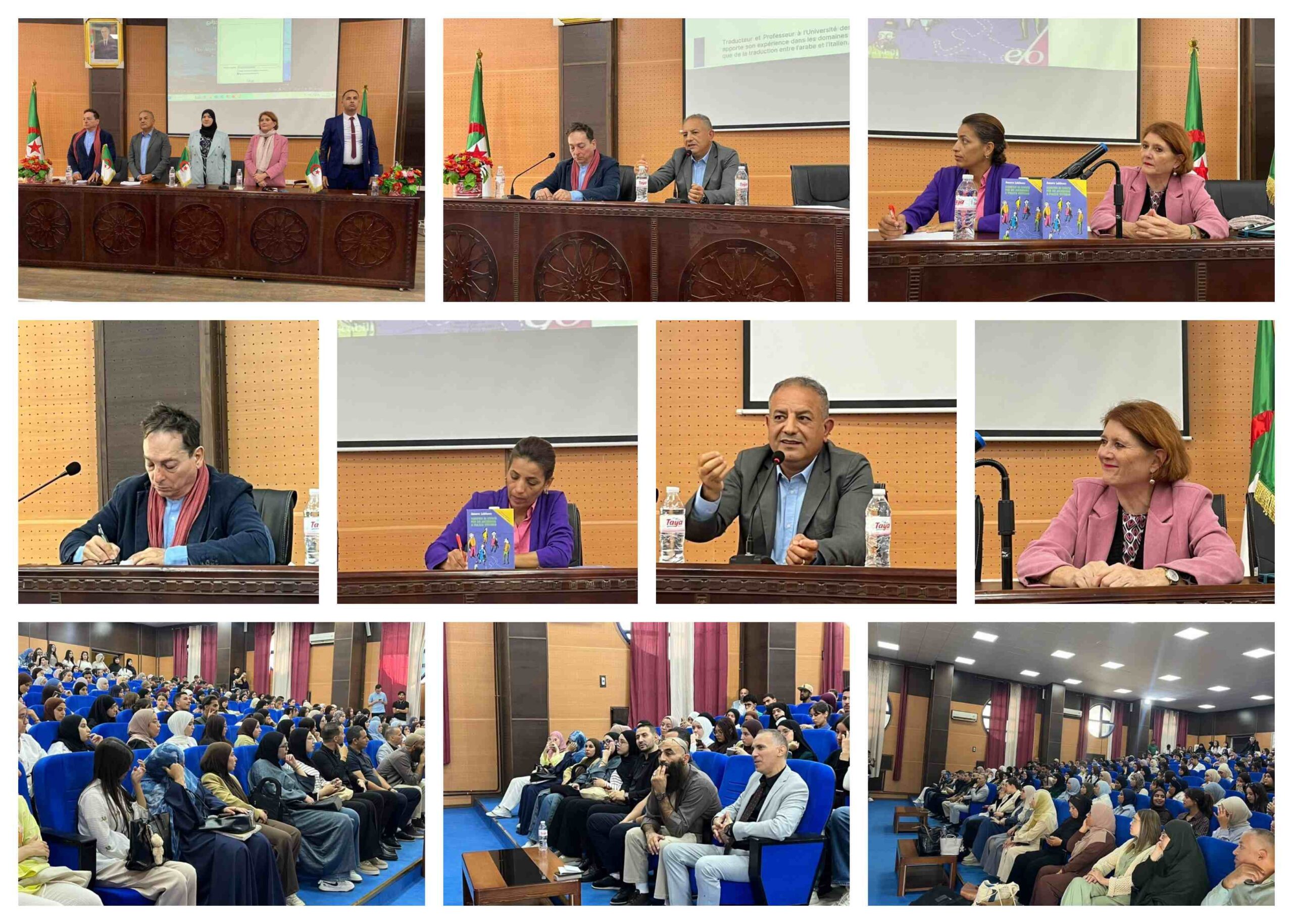
Today, the University of Blida 2 hosted an academic and cultural event to mark the Italian Language in the World Week. The event was attended by the Director of the Italian Cultural Institute in Algiers, Ms. Paola Cordone, the Algerian author Amara Lakhous, and the translator of his works into Italian, Mr. Francesco Leggio. The event was organized by the Faculty of Letters and Languages in coordination with the University Presidency.
The event was opened on behalf of the University Rector by the Vice-Rector in charge of External Relations, Professor Safa Ouled Haddar. It was attended by students from the Department of Italian, the Department of Translation, and the École Normale Supérieure (ENS), in an atmosphere marked by vibrant interaction between the guests and the audience on issues of language, literature, translation, and intercultural dialogue.
In her opening speech, Professor Ouled Haddar emphasized that « hosting this event at the University of Blida 2 is part of its vision aimed at openness toward foreign languages and strengthening cultural and academic partnerships with international institutions. » She noted that « the Italian language is a true civilizational bridge that allows students to explore an ancient culture and opens up broad academic and professional horizons for them. » She added that « hosting a literary figure of Amara Lakhous’s stature represents a valuable opportunity for students to engage directly with an innovative Algerian creative experience that has gained global readership, and to discover the role of translation in bringing peoples closer together. »
The event coincided with the 20th anniversary of the publication of the novel « Clash of Civilizations Over an Elevator in Piazza Vittorio » by author Amara Lakhous. This work marked a milestone in contemporary Mediterranean literature by raising questions about coexistence, identity, migration, and the meeting of cultures within a single space. The occasion provided an opportunity to review this experience and examine its trajectory between the Arabic and Italian language.