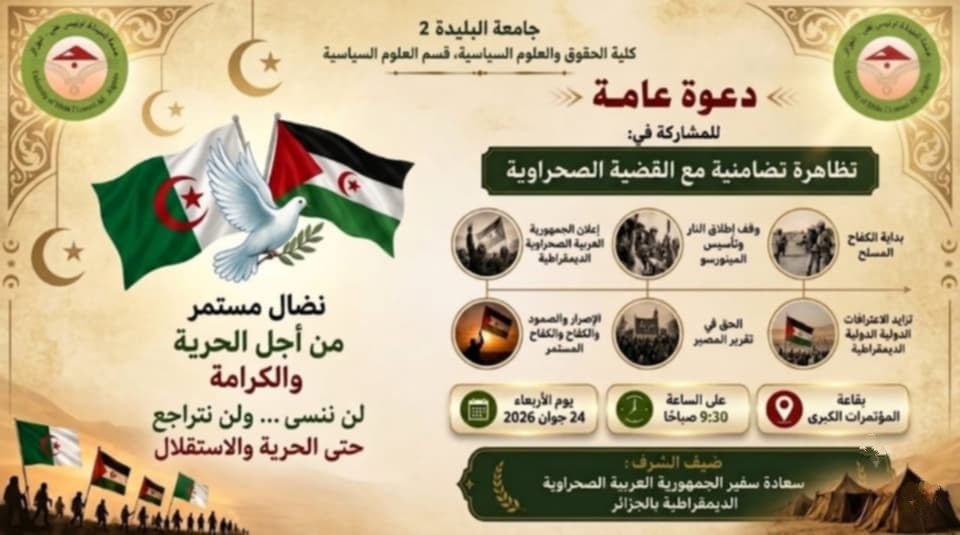
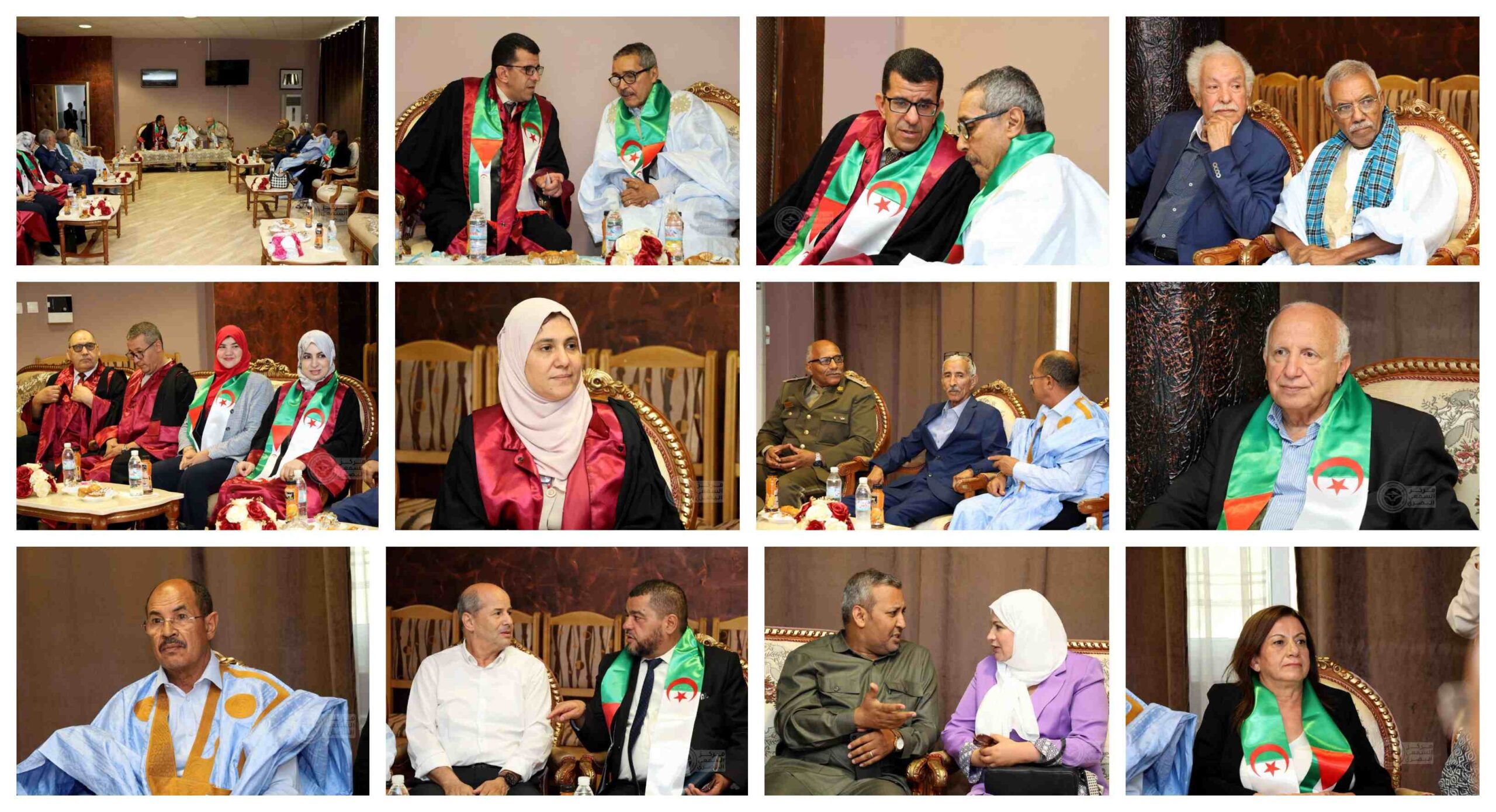
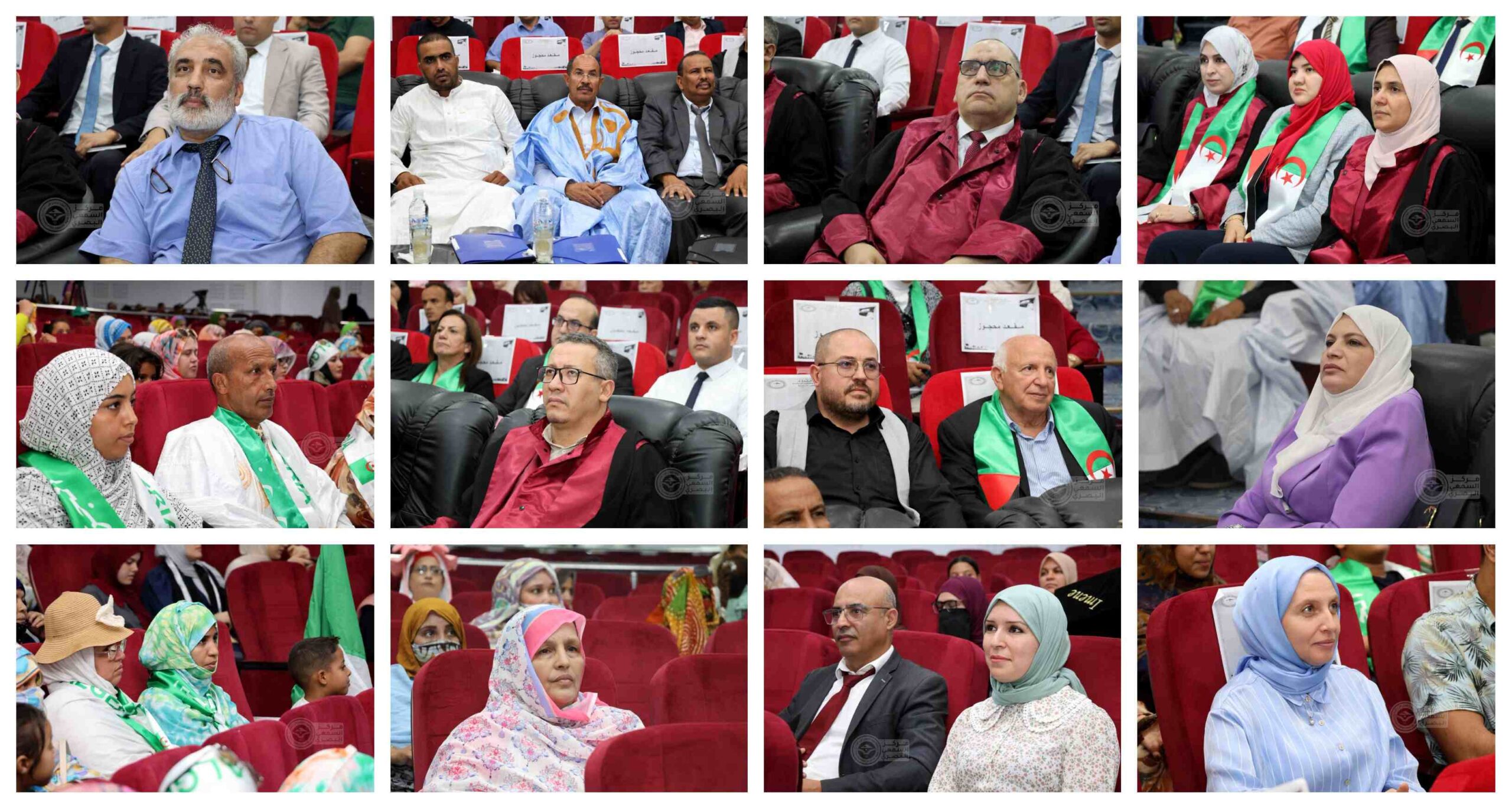
University of Blida 2 hosts a solidarity event with the Sahrawi cause, attended by the ambassador of the Sahrawi Arab Democratic Republic
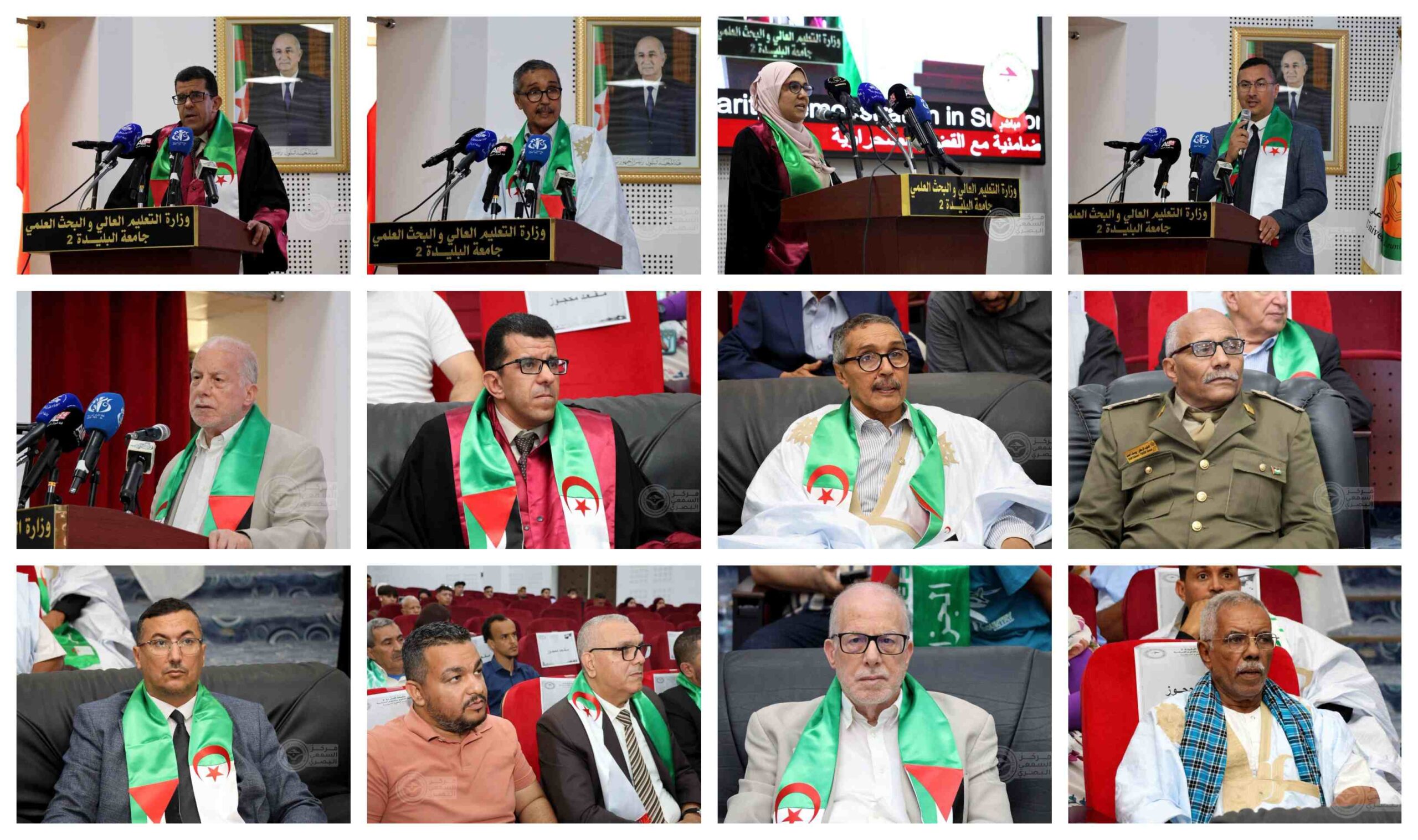
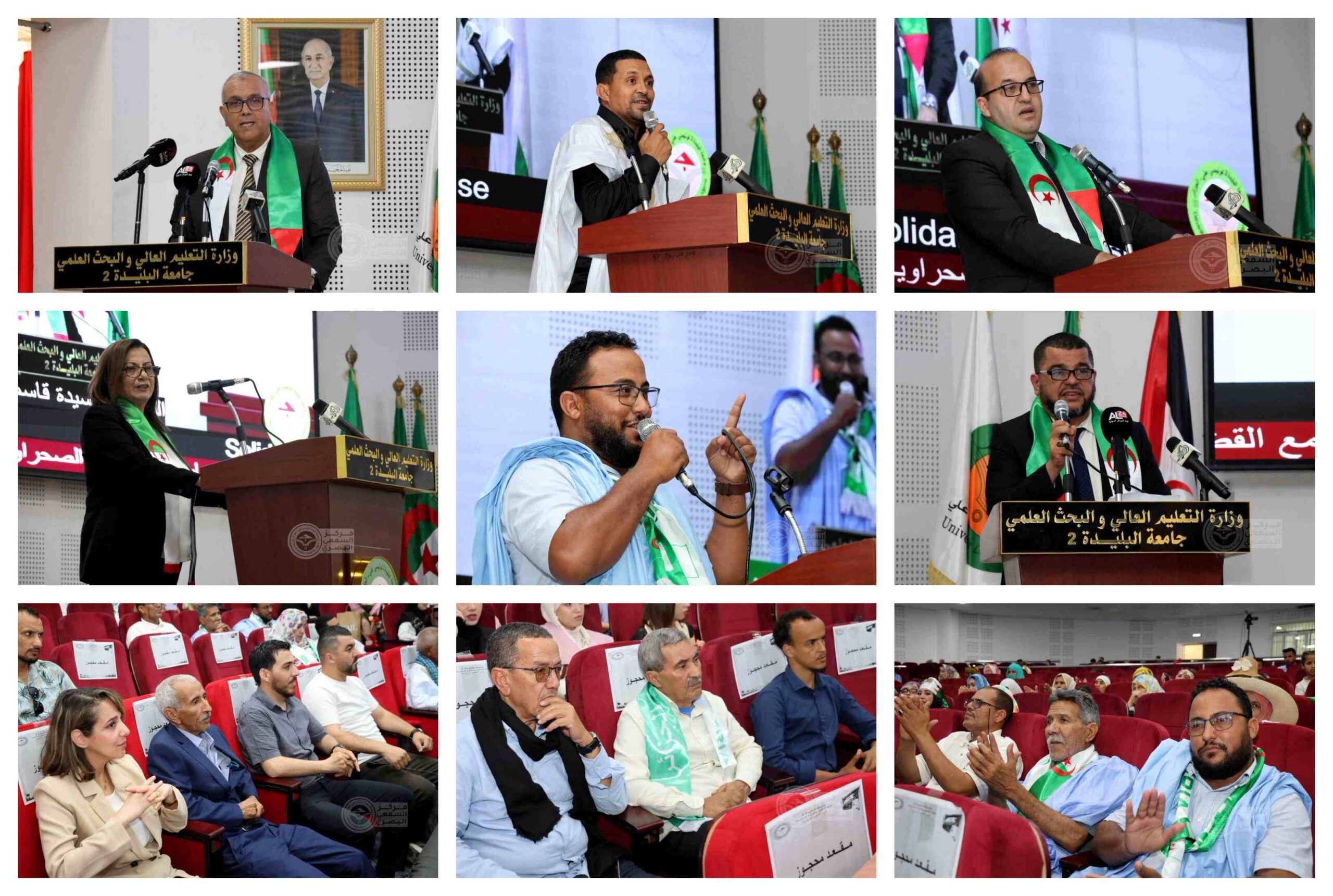
The Faculty of Law and Political Science at the University of Blida 2 organised today a solidarity event with the Sahrawi people, held in the Grand Conference Hall, in the presence of His Excellency the Ambassador of the Sahrawi Arab Democratic Republic to Algeria, Mr. Khatri Addouh Khatri, alongside the Director General of Student Affairs at the Ministry of Higher Education, Mr. Fathi Yousfi, the President of the National Committee for Solidarity with the Sahrawi People, Mr. Saïd ElAyachi, and representatives of the civil and military authorities of the province.
In his opening address, Rector Professor Bachir Ameur affirmed that those present had gathered not to raise fleeting slogans, but to renew their commitment to a just cause that has remained alive in the conscience of free peoples. He described the Sahrawi cause as one of human dignity and the legitimate right to self-determination, stating that solidarity with the Sahrawi people is not merely a political stance but « a moral and human position that reflects our deeply held principles. »
Ambassador Khatri Addouh Khatri reviewed Algeria’s historical support for the Sahrawi cause, rooted in the principles of the November Revolution, and reaffirmed three non-negotiable pillars: the exclusive and inalienable right of the Sahrawi people to self-determination, the imperative of decolonisation, and the right to full autonomy and self-governance — stressing that any position inconsistent with these elements constitutes a circumvention of international law.
Dean Dr. Farida Benothmane underscored the university’s commitment to the values of justice and freedom, while the President of the National Solidarity Committee affirmed that Algeria, true to its revolutionary legacy, has consistently stood against all forms of colonialism — having supported 15 liberation movements worldwide, including the Polisario Front.
The Director General of Student Affairs called for expanding such events nationally and announced a unified program to be launched in coordination with the National Solidarity Committee across all university institutions in the upcoming academic year.
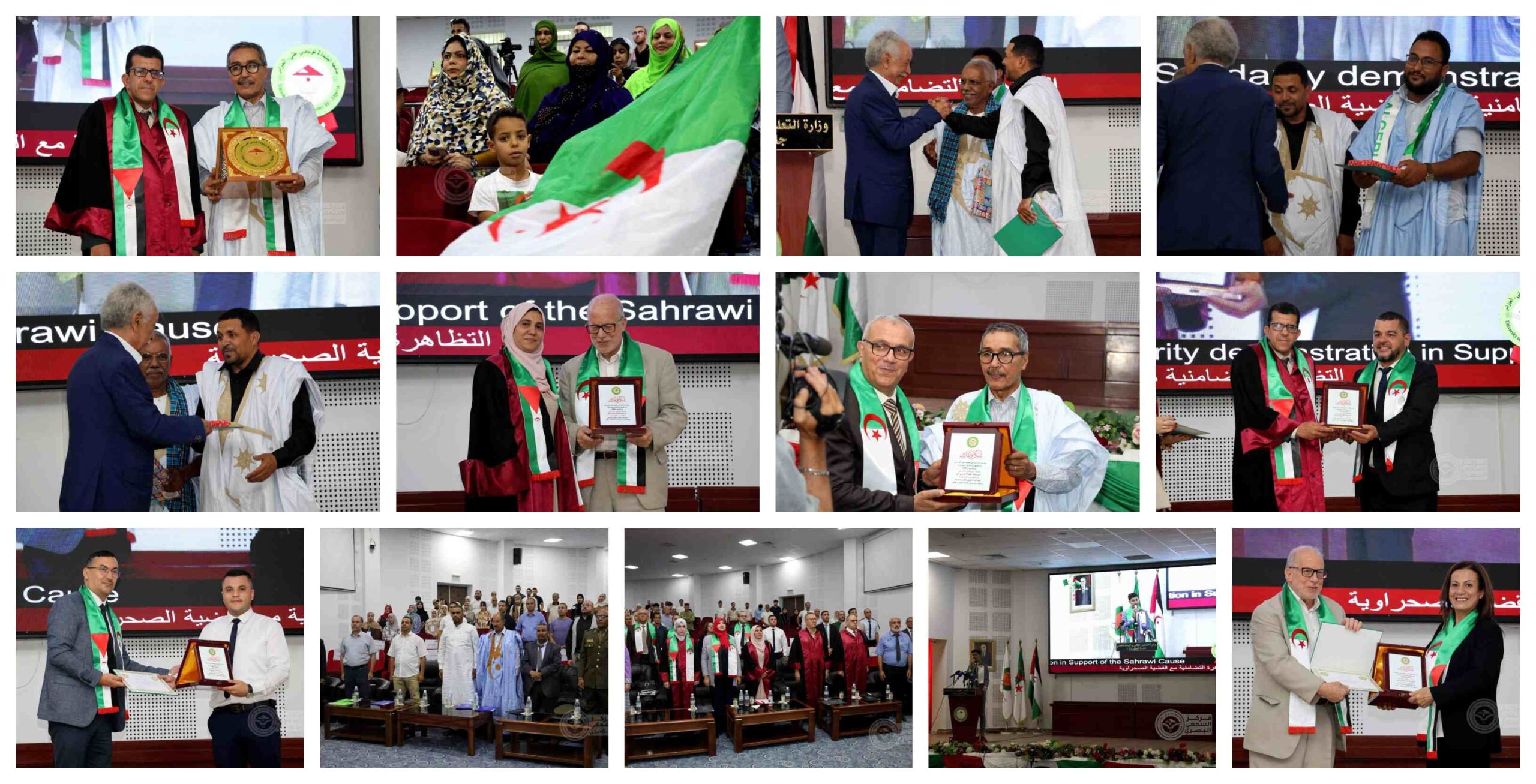
The event’s included a documentary film, academic presentations covering topics such as international legitimacy, digital advocacy, natural resource exploitation, and the role of Sahrawi women in resistance, as well as poetry contributions from the Sahrawi cultural heritage. The event concluded with a recognition ceremony honouring guests and speakers.